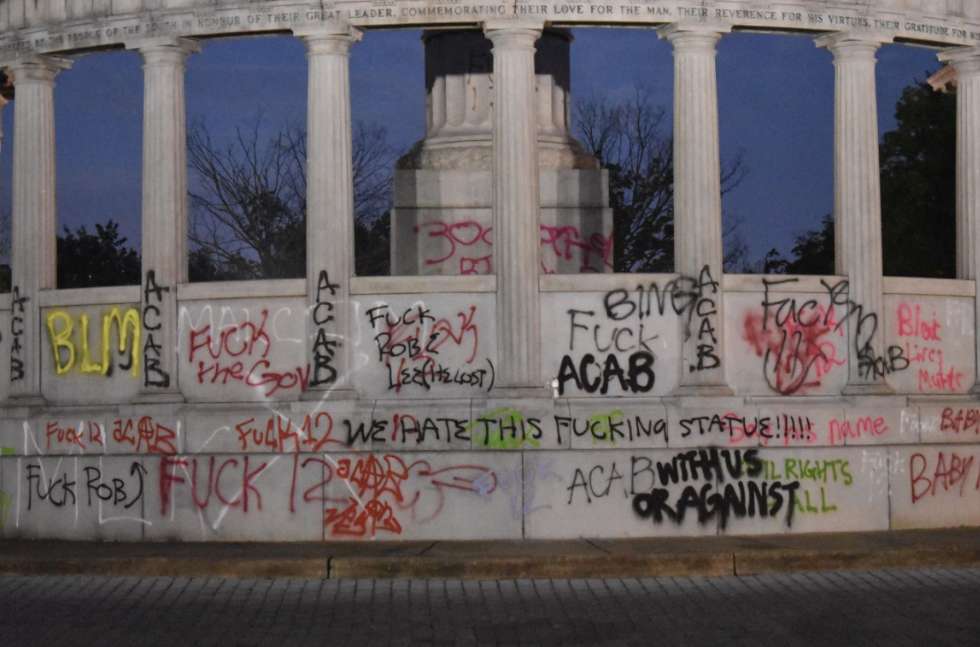
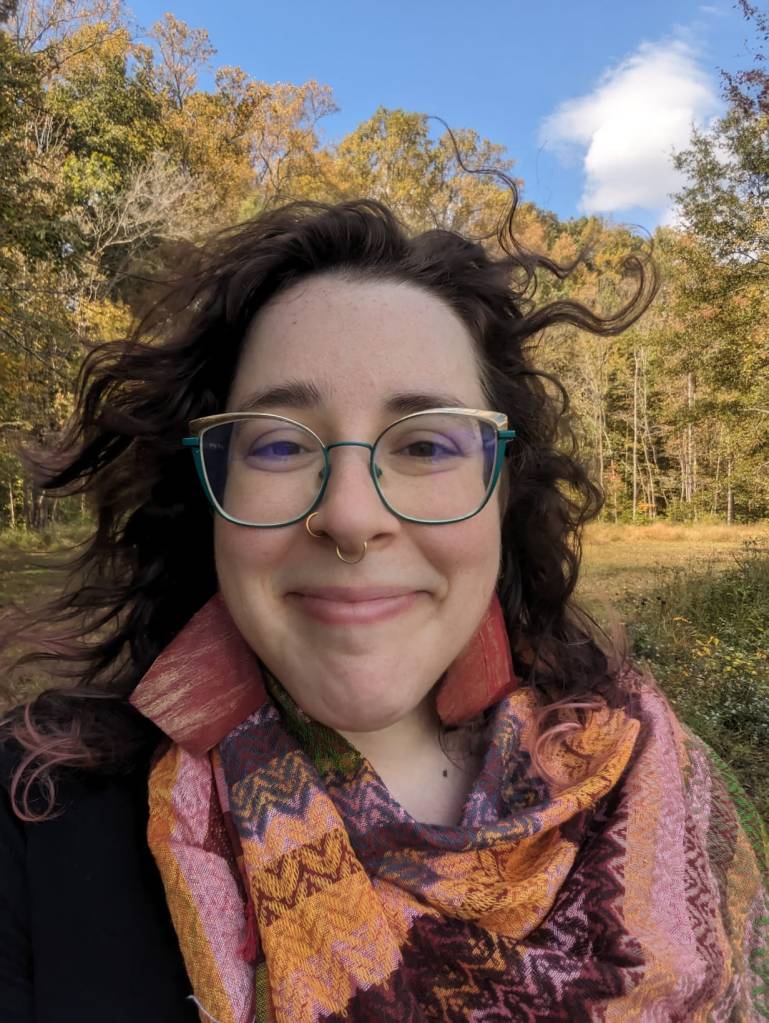
Annie O’Brien is fat white femme from Love Valley, NC and a Religious Studies PhD candidate at the University of North Carolina at Chapel Hill. Her work considers race, religion, and public memory in the Southern US through the contemporary memorialization of lynching murder victims and the defacement of Confederate monuments. She explores how subaltern memory is unearthed in order to contest dominant symbols, narratives, and mythologies of the nation-state, as well as the colonial logics which continue to belie its actions. Her work emphasizes white supremacy as a project of spatial domination, which seeks to sacralize whiteness through public history, ritual acts, and visual and material culture.
As a graduate student pursuing a PhD during our collective tumble off the Plantationocenic precipice, Annie prioritizes work that contemplates human porosity, engages in artistic acts of protest, and pursues transformative social justice. Prior to attending Chapel Hill, Annie worked at a rural NC arts council where she experienced the power the arts have to organize, challenge, and transform communities. This work inspired her to explore public art and performance as ephemeral archival practices that challenge and address historical silences in state narrations of history.
Inspired by the work of Octavia Butler, Audre Lorde, and adrienne maree brown, Annie believes that it is her duty as an academic to engage in collective, accessible, and public work that supports reckoning with the past, challenging the present, and imagining new possible futures. Part of this work necessarily involves thinking critically about how religions have and continue to shape and inform our movement through the world and in relation to one another. Thinking with Édouard Glissant, Mark Johnson, and George Lakoff, Annie is also interested in the role metaphor plays in shaping human relations, and the possibilities of poetry in defying metaphors of commodification, disposability, and value.
 annie rose o'brien